Wimbledon Player Media Protest 2026: Why Top Stars Are Cutting Interviews Short
Inside the ongoing Wimbledon player media protest over prize money and revenue share

Direct Answer
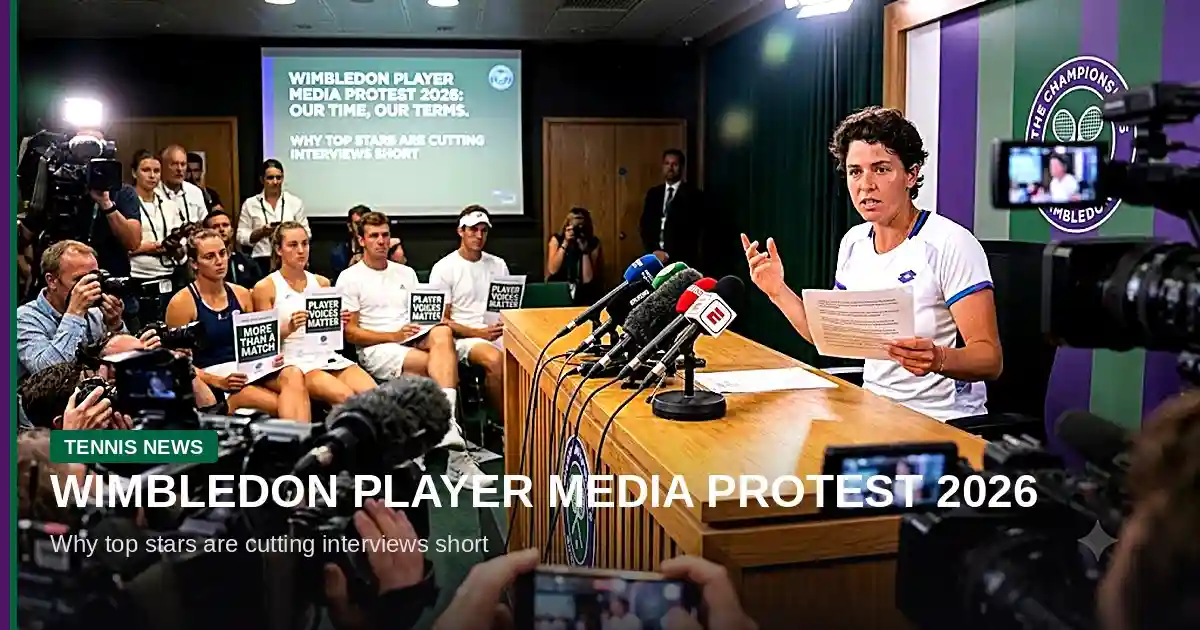
The Wimbledon player media protest is a coordinated move by leading ATP and WTA players to limit press conferences to just 15 minutes during the first week of the 2026 tournament. The action is a continuation of the prize money protest that began at the French Open, and it is happening even though Wimbledon raised its prize fund by 20% this year.
What Is the Wimbledon Player Media Protest?
The Wimbledon player media protest is the latest chapter in a season-long dispute between top tennis players and Grand Slam organisers over how much prize money players should receive compared with how much revenue a tournament earns. Leading men’s and women’s players have agreed to restrict their post-match press duties to only 15 minutes during the opening week of Wimbledon 2026, which starts on Monday, 29 June.
This is not a brand-new idea. The protest began at the French Open, where players first limited media time to roughly 15 minutes per session — a number chosen because it reflects the share of revenue they say they currently receive from Grand Slam events. A representative firm acting for the players confirmed in a statement that the “direct action protest” will now continue through the first week at the All England Club.
Why Players Are Protesting Despite a Record Payout
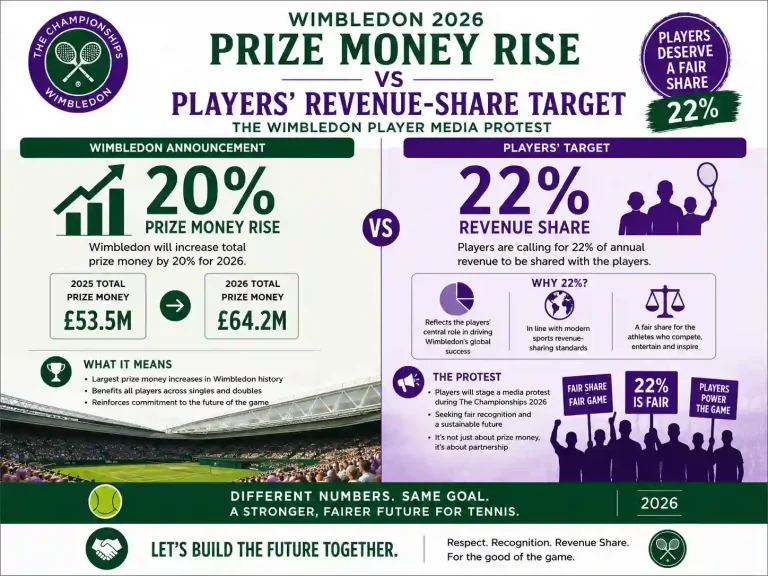
On the surface, this looks confusing. Wimbledon increased its total prize money by 20% this year to £64.2 million ($84 million), the biggest single jump in the tournament’s history. Singles champions will take home £3.6 million ($4.75 million) each. So why are players still unhappy?
The answer comes down to one simple idea: percentage of revenue. Players argue that even with the new prize pot, Wimbledon is still paying out only around 15% of its total revenue to athletes, well below the roughly 22% they say is standard on the regular ATP and WTA tour events. Their long-term goal is to push that figure toward 22% by 2030, along with better player welfare contributions such as pensions.
- Prize money increase: 20% rise to £64.2 million for 2026.
- Player demand: revenue share closer to 22%, matching tour-level events.
- Current estimate: players say Grand Slams pay roughly 15% of revenue.
- Protest method: press conferences capped at 15 minutes for week one.
- Players involved at French Open: Aryna Sabalenka, Coco Gauff, Iga Swiatek and Jannik Sinner all took part; Novak Djokovic notably did not.
Prize Money vs Revenue Share — Quick Comparison Table
| Detail | 2025 Position | 2026 Position |
|---|---|---|
| Total prize fund | £53.5 million (approx.) | £64.2 million |
| Singles champion prize | Lower payout | £3.6 million ($4.75m) |
| Player-estimated revenue share | Below 15% | Slightly below 15% |
| Player target by 2030 | N/A | 22% revenue share |
| Media protest action | Started at French Open | Extended to Wimbledon week one |
Infographic: Wimbledon’s 20% prize money rise versus the players’ 22% revenue-share target for the Wimbledon player media protest, 2026.
Wimbledon’s Official Response to the Protest
The All England Club has pushed back firmly. A spokesperson said the organisation was “surprised and disappointed” by the players’ decision, pointing out that the prize pot increase is the largest in the event’s history and that hundreds of millions of pounds have been invested in player facilities as part of a three-year transformation project.
All England Club chair Deborah Jevans has also argued that tying prize money directly to revenue percentage “doesn’t make sense,” since Grand Slams carry far greater responsibility for reinvesting in the wider sport than standard tour events do. Talks between the All England Club and player representatives are expected to continue after this year’s tournament concludes.
“Wimbledon puts the players at the heart of all our decisions, and we invest significantly in them every year.” — All England Club spokesperson
Frequently Asked Questions
What is the Wimbledon player media protest 2026 about?
It is a coordinated decision by top players to limit press conferences to 15 minutes during Wimbledon’s first week, protesting that prize money still falls below their target share of tournament revenue.
Did Wimbledon increase prize money this year?
Yes. Wimbledon raised its 2026 prize fund by 20% to £64.2 million, the largest single increase in the tournament’s history, with singles champions earning £3.6 million each.
Which players are taking part in the protest?
The protest is not tied to one player; it is organised through player representatives. At the French Open, stars including Aryna Sabalenka, Coco Gauff, Iga Swiatek and Jannik Sinner limited media time, while Novak Djokovic did not join in.
How long will the media restriction last at Wimbledon?
The 15-minute media cap is planned to run through the first week of the 2026 Championships, similar to the format used earlier at the French Open.
Summary
The Wimbledon player media protest shows that the fight over Grand Slam prize money is far from over. Even after a record 20% pay rise, top players are using 15-minute press conferences to keep pressure on organisers, aiming for a 22% revenue share by 2030. Wimbledon insists it is already investing heavily in players, setting up a tense but newsworthy build-up to the 2026 Championships.